
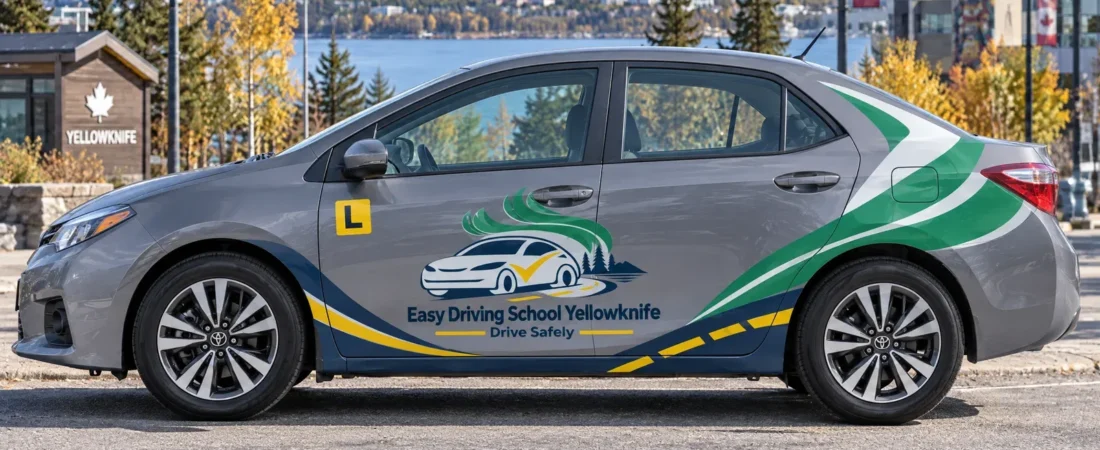
Winter in Yellowknife puts drivers to the test: icy roads, blowing snow, extreme temperatures, and very short days. Here are six simple habits to drive safely, whether you are a new driver or new to the North.
1. Get your vehicle ready before the deep cold
Winter tires in good condition, a checked battery, and a block heater plugged in on cold nights make starting easier and improve grip.
2. Clear your whole car
Windows, mirrors, lights, and the roof: snow left on the roof can slide onto the windshield the first time you brake and block your view.
3. Double your following distance
On snow or ice, braking distance increases sharply. Leave much more space than in summer between you and the vehicle ahead.
4. Brake and steer gently
Sudden movements cause loss of grip. Anticipate, slow down before curves and intersections, and press the pedals progressively.
5. Watch out for black ice
Nearly invisible, it often forms on bridges, in shaded areas, and at intersections. If the road looks wet in deep cold, assume it is icy.
6. Keep an emergency kit
Blanket, gloves, hat, flashlight, scraper, shovel, booster cables, and snacks: if you break down in extreme cold, every item counts.
Want to practise with an instructor? Discover our winter driving sessions, in English or French.